Christmas Watercolor Clipart Candy Cane: Festive Design Elements
There’s a distinct warmth that watercolor brings to holiday designs, a handcrafted feel that digital precision often misses. When you’re working on seasonal projects, the goal is to evoke that cozy, nostalgic spirit without things looking sterile or over-produced. That’s where high-quality design assets come into play. If you've been searching for that perfect blend of artisan charm and professional utility for your holiday campaigns, the Christmas Watercolor Clipart Candy Cane collection is the kind of resource that immediately elevates your work. It’s not just about a simple candy cane illustration; it’s about capturing the fluidity of paint, the texture of the paper, and the vibrant energy of the season in a format that is ready for high-end production.
The Anatomy of the Artwork: Style and Appeal
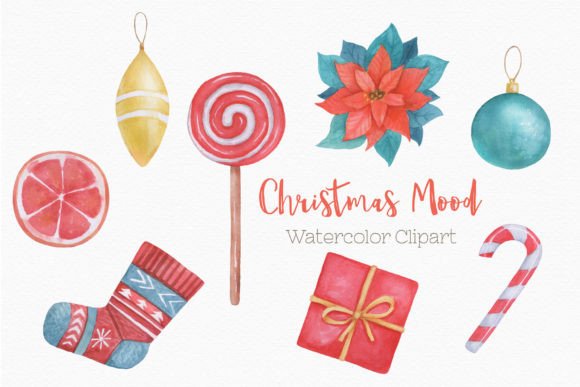
Understanding the visual characteristics of these elements is key to using them effectively. This collection features eight distinct, hand-painted elements. The style is rooted in "wet-on-wet" watercolor techniques, where the pigments bleed softly into one another, creating that signature organic edge. You will notice the subtle variations in opacity—areas where the paint is darker at the stroke’s start and lighter as the brush trails off. This is not a flat vector graphic; it is a textured, rasterized piece of art rendered at a crisp 600 dpi.
The personality of these graphics is whimsical yet sophisticated. The candy canes likely feature the classic red and white spiral, but the watercolor treatment softens the reds into pinks and burgundies, adding depth. The transparency of the PNG files means these elements float seamlessly over backgrounds, whether you are layering them over a rustic kraft paper texture in a digital mockup or placing them on a pristine white website header. Because they are individual elements, you have the creative freedom to cluster them together to form a wreath, use them as singular accents, or repeat them to create a custom digital pattern.
Practical Applications: From Screen to Print
The versatility of high-quality clipart lies in its ability to adapt to various mediums. For the small business owner or entrepreneur, these assets are invaluable for quick turnarounds during the busiest retail season. You can utilize the Christmas Watercolor Clipart Candy Cane for packaging design—imagine a wax seal stamp effect on a shipping box or a delicate accent on a product label. It adds a layer of perceived value to the product, suggesting that care went into the presentation.
For marketers and social media managers, the 600 dpi resolution ensures that even if you crop in tight on a specific element for an Instagram story or a Pinterest pin, the image remains sharp. These elements work beautifully as "visual anchors" in email newsletters. Place a candy cane near your "Shop Now" button to draw the eye, or use it to break up text blocks in a holiday blog post. Graphic designers will find these particularly useful for client work involving party invitations, greeting cards, and quote graphics. The artistic nature of the clipart allows you to create a "hero image" aesthetic without commissioning custom illustration for every single project.
Integrating Art into Brand Identity
Using a specific visual asset repeatedly across a campaign builds recognition. When you incorporate the Christmas Watercolor Clipart Candy Cane into your holiday strategy, you are establishing a seasonal sub-brand. Consistency is crucial in brand identity. If you use this watercolor style on your Instagram feed, ensure it carries over to your website’s holiday landing page and your print materials.
However, the success of these elements depends heavily on context and font pairing. A watercolor candy cane is soft and organic, so pairing it with a rigid, heavy geometric sans serif might create visual dissonance. Instead, consider balancing the visual hierarchy. If the clipart is the primary visual focus, your typography should support it, not fight it. A clean sans serif font for body text provides excellent readability, while a script font or handwritten font for headers can mimic the fluidity of the watercolor. This creates a cohesive modern typography layout where the art and the text feel like they belong in the same family.
Technical Considerations and Workflow
Before diving into a project, it is essential to evaluate the technical fit. While the files are high-resolution PNGs, remember that they are raster images, not vectors. This means you cannot scale them to the size of a billboard without losing quality, but for standard digital design (web, social, video overlays) and standard print design (magazines, flyers, A4/Letter size documents), 600 dpi is more than sufficient.
When testing these elements, look at how they interact with negative space. Watercolor art often has "happy accidents"—small speckles of paint outside the main shape. On a white background, this looks great. On a dark background, those stray pixels might be visible. Most professional clipart packs clean these up, but it is always worth checking. Furthermore, consider the color grading. If your brand palette is strictly cool-toned (blues and silvers), a traditional warm-toned red candy cane might clash. However, in Photoshop or Canva, you can easily apply a color overlay or hue/saturation adjustment to tint the watercolor elements to match your specific brand identity, provided you want to step away from the traditional red.
Avoiding Visual Clichés
It is easy to fall into the trap of "Christmas overload." Just because you have eight elements doesn't mean you need to use all eight at once. The mark of a professional designer or publisher is restraint. Use the Christmas Watercolor Clipart Candy Cane as a subtle border element rather than a central focal point. Or, use a single cane to underline a headline. This approach feels editorial and high-end, rather than cluttered.
For crafters and hobbyists, these elements are perfect for physical goods like gift tags or handmade cards. The high resolution ensures that when you print them on cardstock, the texture of the watercolor mimics the texture of the paper, creating a truly tactile experience. Ultimately, this collection serves as a bridge between the convenience of digital assets and the soul of hand-painted art. By treating these elements with the same respect you would a photograph or a custom logo, you ensure your holiday projects resonate with authenticity and professional polish.